TB-500 is the heptapeptide fragment of thymosin beta-4 — and most of its evidence belongs to a different molecule.
A case review of the published record: what the studies measured, which findings are on the 7-mer versus the full-length parent protein, and where the human trail goes cold. Every quantitative claim is cited.
The case in one line
TB-500 is the synthetic, N-acetylated heptapeptide Ac-LKKTETQ — residues 17 to 23 of thymosin beta-4, the protein's actin-binding core [1]. That is the molecule sold and named TB-500, and the molecule characterized in anti-doping science. It is not the molecule behind most of the headline findings.
The overwhelming majority of the efficacy research credited to TB-500 was run on full-length thymosin beta-4 — the 43-residue, ~4963 Da parent protein — not on the ~889 Da fragment. This site reads the literature as a case file: each study is an exhibit, each finding carries a tag naming which molecule it is actually on, and the gaps are marked as gaps. The fragment has no completed controlled human trial for any indication.
What is TB-500?
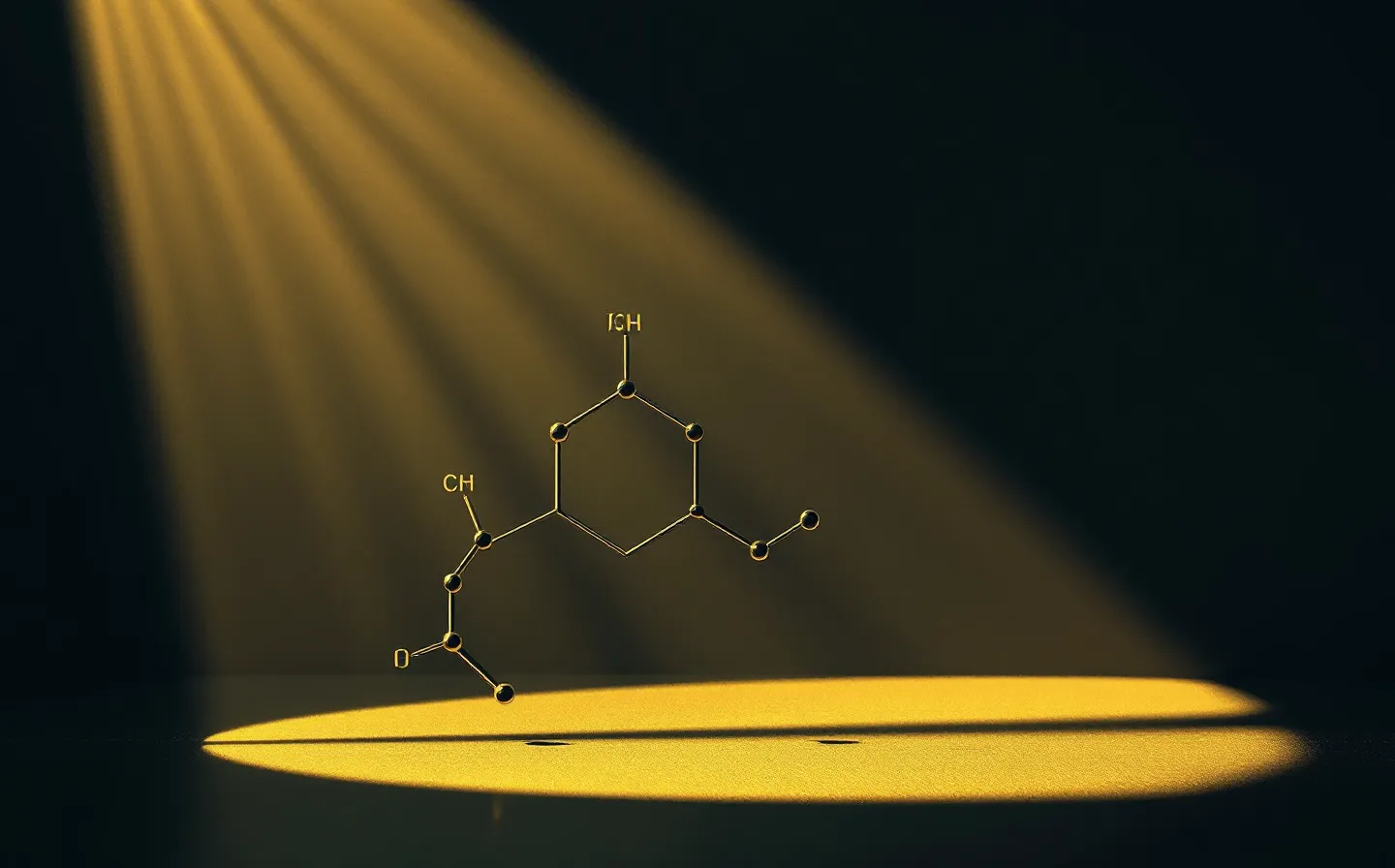
TB-500 is the synthetic Ac-LKKTETQ heptapeptide carrying the actin-binding motif of thymosin beta-4 (Tβ4), the body's principal G-actin-sequestering peptide [1][5]. Its sequence is Ac-Leu-Lys-Lys-Thr-Glu-Thr-Gln, molecular weight ~889 Da, formula C38H68N10O14.
The parent protein is released by platelets and macrophages at sites of injury, where it is associated with cell migration, angiogenesis, and reduced scarring [5]. "TB-500" itself is a synthetic construct and a veterinary/commercial designation, not an endogenous species. The defining caveat of this whole file: whether the isolated 7-mer reproduces the parent protein's effects at the doses used in peptide research has not been established in controlled human trials.
TB-500 peptide: structure and identity
The TB-500 peptide is the acetylated heptapeptide form of the thymosin beta-4 actin-binding region. Acetylation of the N-terminus makes it more chemically robust than the full-length protein, though it remains subject to proteolysis and freeze-thaw degradation.
No single PubChem CID or CAS number is consistently registered for the Ac-LKKTETQ fragment under the name TB-500; published identifiers (TMSB4X, UniProt P62328) belong to the parent protein. In commerce and in the analytical literature, "TB-500" denotes the 7-mer; in most efficacy papers, the active agent is the full-length protein. That split is the source of nearly every overstated benefit claim, and it is the throughline of this review. The full reconstruction lives in the TB-500 mechanism of action file.
What this file establishes, and what it does not
On the record: thymosin beta-4 forms a 1:1 complex with monomeric actin and sequesters it by capping both ends, a structure resolved by X-ray crystallography to 2 Å [1]. In a rat full-thickness wound model, the parent protein raised re-epithelialization by 42% at 4 days and up to 61% at 7 days versus saline [3]. In healthy volunteers, intravenous full-length Tβ4 was well tolerated up to 1260 mg in a randomized, placebo-controlled Phase 1 study [6].
Unproven: the fragment's efficacy in humans. There are no completed controlled clinical trials of the TB-500 heptapeptide for any indication. The pro-angiogenic, pro-migratory properties that aid repair are also the basis of a tumor-angiogenesis safety concern, and thymosin beta-4 is overexpressed in several cancers [5]. Start with TB-500 tissue repair and wound healing, then weigh the safety signals in the TB-500 safety signals and side effects file.
How to read this case file
Each page of this site is an exhibit, and each exhibit is read with the same discipline: state what was measured, name the molecule it was measured on, and cite it. The research file reconstructs the mechanism and the studies — the 1:1 actin-sequestration structure [1], the cardiac PINCH–ILK–Akt result [2], the non-monotonic stroke dose-response [4], the null mdx-mouse strength outcome, and the safety signals. The tissue-repair file gathers the strongest exhibits, the wound and epithelial findings on the parent protein [3]. The dosage file logs what was administered, to which species, by which route — never a human protocol. The legal-status file sets out the regulatory facts.
What keeps the file honest is a single tag carried through every finding. A result on full-length thymosin beta-4 is marked as such; a result on the Ac-LKKTETQ fragment is marked as such; a claim that quietly swaps one for the other is flagged. Most marketing for TB-500 leans on parent-protein data without that tag, which is how a 7-mer with no completed human trial comes to be described as if the protein's decades of evidence were its own.
Why the mistaken-identity problem matters
The two molecules are not interchangeable on the evidence. Full-length thymosin beta-4 is a 43-residue protein with a documented mechanism, animal efficacy across several organ systems, and a human Phase 1 safety record [5][6]. TB-500 is a 7-residue fragment of it, sold and named for the parent, but tested directly in almost none of those settings.
That gap is not a technicality. It means the confident percentages a reader meets online — the re-epithelialization figures, the cardiac and neurological results — are real numbers attached to a different, larger molecule [3][4]. Whether the fragment reproduces them at the doses used in peptide research is exactly the question the literature has not answered. Reading the thymosin beta-4, the parent protein file first is the fastest way to see which claims are borrowed and which are earned.
The effects layer now sits beside the study record
The signed rev3 corpus adds a plain-language TB-500 effects and safety page. Community reports remain labeled as anecdotal, while the biological and regulatory cautions resolve to audited citations without adding a dose or regimen.